


If you run paid campaigns for a living, SEO probably looks like a black box. You can’t set a bid, you can’t A/B test a headline and see results by tomorrow morning, and nobody can tell you exactly why a competitor outranks you. This guide is written specifically for performance marketers, not for SEO beginners in general, and it covers where performance marketing SEO actually fits into a paid-first skill set: what transfers from paid media, what genuinely doesn’t, and how to use the data you already have to make smarter organic decisions.
The honest starting point is that this isn’t paid media with a longer delay. The underlying mechanics are different enough that treating SEO like a slow paid channel leads to bad expectations and worse decisions.
Why Paid-Channel Skills Don’t Fully Transfer to SEO
A performance marketer’s core instincts — watch the data daily, adjust bids, kill underperforming ads fast — don’t map cleanly onto SEO, because SEO has no bid lever and no same-day feedback loop. You can’t pay Google more to rank higher tomorrow. A page you publish today might not show meaningful ranking movement for months, and when it does move, isolating which specific change caused it is far harder than reading a paid campaign’s daily report.
This mismatch is the central adjustment problem here. It isn’t that SEO is simply slower; it’s that the entire feedback structure a performance marketer relies on to make good decisions doesn’t exist in the same form.
What Performance Marketers Already Know vs. What’s New
What transfers:
- Conversion-focused thinking (not just traffic, but what traffic actually does)
- Comfort with data and reporting tools
- Understanding of keyword intent from bidding on search terms
- Budget and ROI accountability mindset
What’s genuinely new:
- Technical SEO concepts (crawlability, site structure, page speed as a ranking factor)
- Content strategy built around topical depth, not just landing page conversion copy
- Link building and off-page authority signals
- Patience with a feedback loop measured in months, not days
A performance marketer moving into this work isn’t starting from zero. The conversion-tracking instincts and comfort with search intent data are a real head start most SEO beginners don’t have. But the technical and content layers are genuinely new territory.
Is SEO Really Part of Performance Marketing?
Strictly, traditional performance marketing is defined by pay-per-outcome pricing, a model SEO doesn’t have. You can’t buy a specific ranking position the way you can buy ad placement.
In practice, though, the term has become a common working label for a simpler reason: performance marketers increasingly own the SEO function inside their teams, whether or not the underlying mechanics match the strict definition.
Using Paid Search Data to De-Risk SEO Content
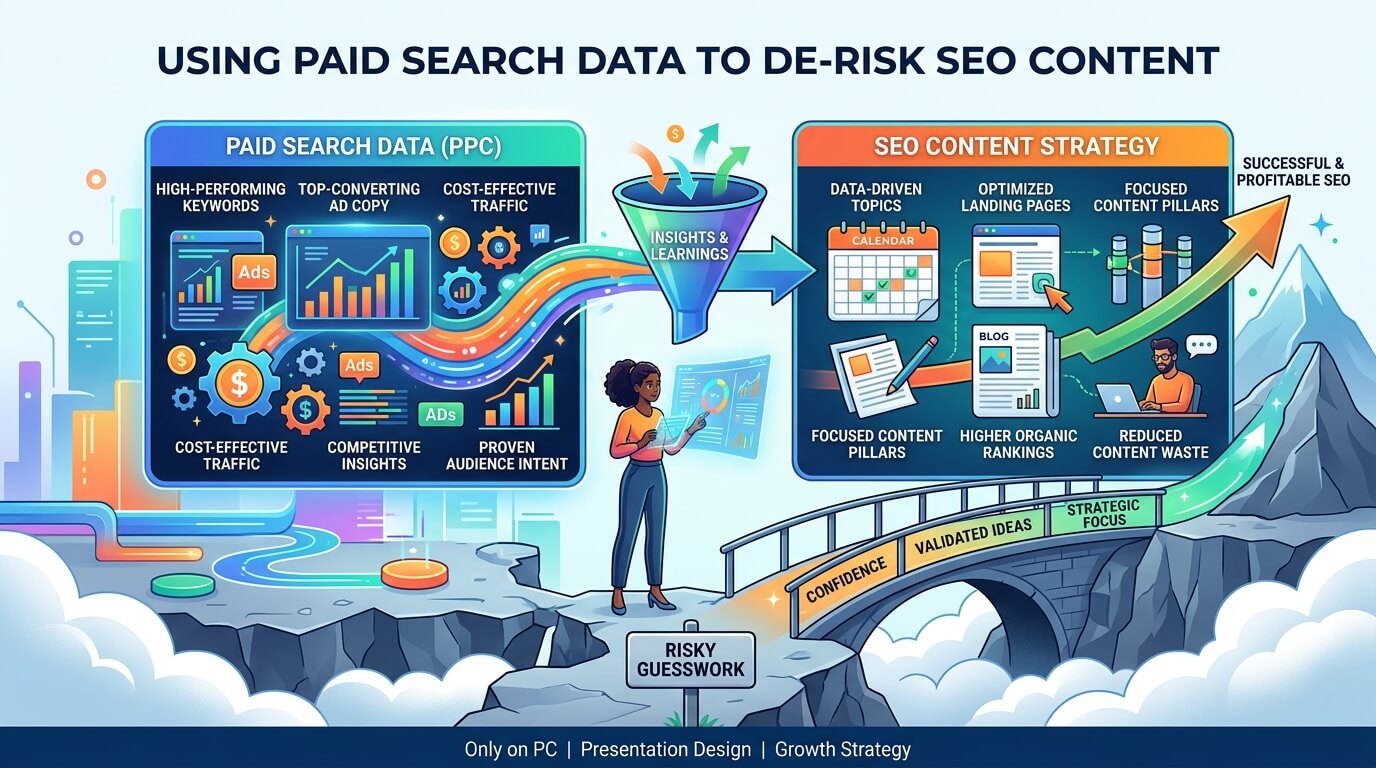
This is where a performance marketer’s existing position is a genuine advantage. Google Ads campaigns generate keyword-level conversion data almost immediately — which search terms actually drive leads, not just clicks.
A practical workflow:
- Pull keywords from existing paid campaigns that show strong conversion rates
- Check whether the site has dedicated organic content targeting those same terms
- Prioritize content creation for high-converting keywords with no organic presence yet
- Treat paid performance as a signal, not a guarantee, since paid and organic searcher intent can diverge
Running a keyword through paid search first, before committing content resources to ranking for it organically, is a practical way to de-risk that investment.
Reducing Customer Acquisition Cost as Paid Costs Rise
Paid search costs have been climbing steadily. The average cost per click in Google search advertising reached $5.42 in 2026, more than double the $2.32 average recorded a decade earlier in 2016, and costs rose year over year across the large majority of tracked industries even in what one report called an unusually stable year [LocaliQ/Vynce Digital]. Part of this pressure comes from AI-driven search features compressing the organic click pool, pushing more advertisers to compete for a shrinking supply of paid clicks [Aaron Dalrymple LLC].
This is the concrete business case for taking this seriously: as paid CAC climbs, an organic channel that doesn’t carry a per-click cost becomes a genuine hedge, not just a nice-to-have.
Full-Funnel Channel Allocation
A full-funnel approach uses paid search where immediacy matters — bottom-funnel, high-intent, time-sensitive keywords — while organic search builds visibility for earlier-funnel, research-stage queries.
| Funnel Stage | Paid Search Role | SEO Role |
| Awareness | Limited, expensive for broad terms | Strong fit, informational content |
| Consideration | Moderate, comparison-intent keywords | Strong fit, guides and comparisons |
| Decision | Primary channel, high-intent terms | Supporting, branded and long-tail terms |
Conversion rate optimization on landing pages matters for both channels equally, since a page that converts poorly wastes both paid spend and organic effort the same way.
Attribution complicates this allocation further. A last-click attribution model would credit the entire conversion to the final paid touch, erasing the organic content’s actual role in the journey. Multi-touch attribution models, which distribute credit across every touchpoint, give a more honest picture, though they require enough conversion volume to produce statistically meaningful results.
Reporting SEO Alongside Paid Channels
A shared dashboard pulling from both Google Search Console and paid platforms supports the kind of channel-agnostic view a performance-marketing team actually needs to make budget decisions.
A few things a genuinely useful SEO report should include:
- Organic conversion rate, not just traffic or ranking position
- Keyword-level performance for the same terms tracked in paid campaigns
- Month-over-month trend, since single-month snapshots are noisy for SEO specifically
- Any technical issues resolved, since these often precede ranking movement by weeks
Building In-House SEO Skill vs. Outsourcing
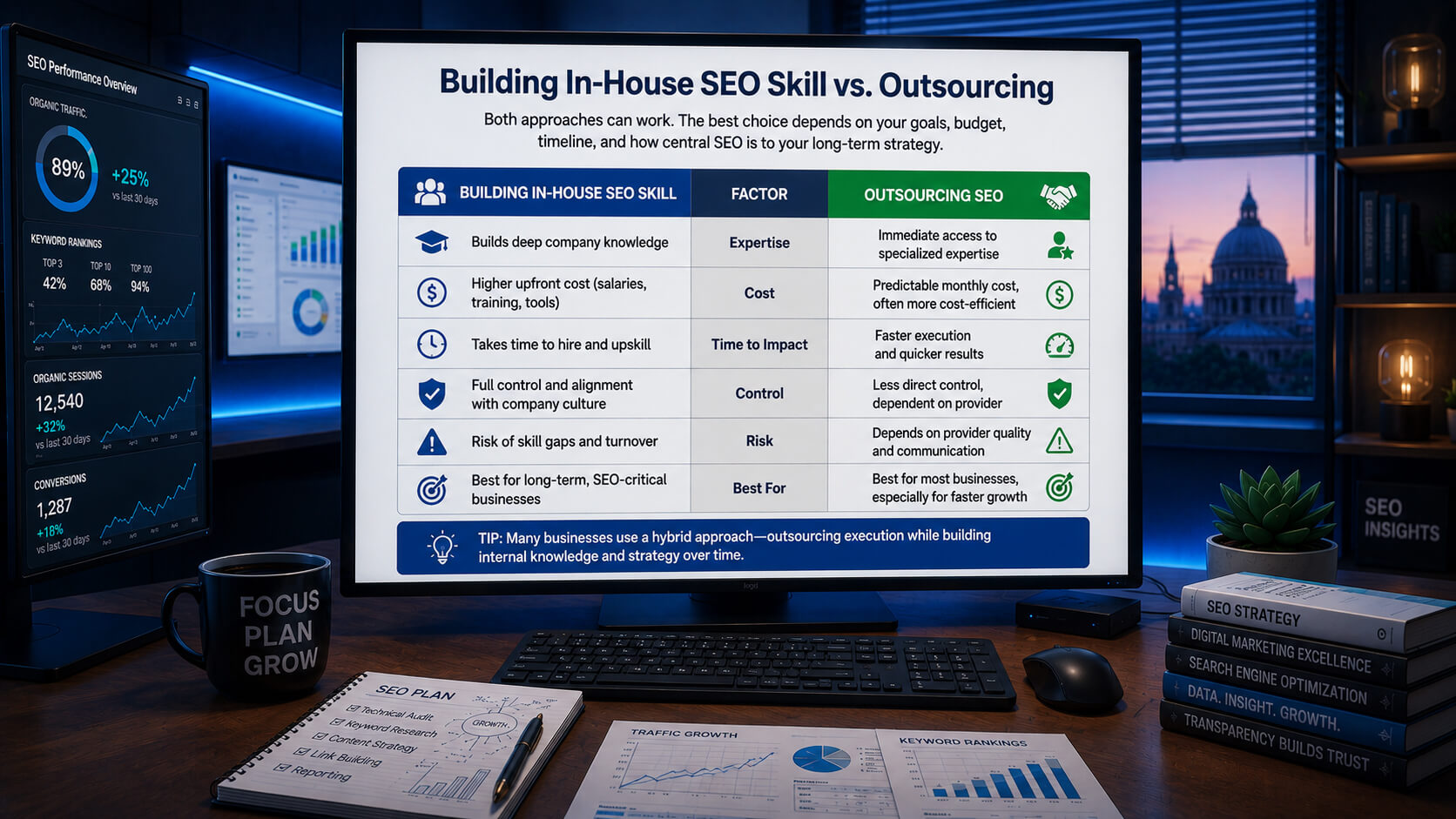
Learning enough about this discipline to manage it intelligently is a genuinely different commitment than becoming capable of executing SEO independently. Most performance marketers benefit from the former without necessarily needing the latter.
A reasonable dividing line: strategic decisions are worth learning directly. Technical execution (site architecture changes, structured data implementation, backlink outreach) is often better outsourced to a specialist.
The size of the organization matters here too. A small team without budget for a dedicated SEO hire often has no realistic choice but to build baseline in-house capability. A larger team with meaningful paid budget already in motion usually gets more value from hiring or contracting a specialist early.
Common Mistakes Performance Marketers Make With Performance Marketing SEO
- Treating SEO like a slower paid channel — expecting a budget increase to speed up results the way it speeds up paid delivery
- Judging results after a few weeks — SEO’s feedback loop runs in months, and early judgment tends to kill genuinely promising work
- Ignoring technical issues in favor of content volume — publishing more content on a technically broken site wastes effort
- Applying last-click attribution to organic — this systematically undercredits SEO’s contribution
What a Realistic First 90 Days Looks Like
A performance marketer starting to take this seriously shouldn’t expect ranking movement in the first quarter. A more realistic set of first-90-day goals looks like this:
- Complete a technical audit identifying crawlability, speed, and structural issues
- Cross-reference paid keyword conversion data against existing organic content gaps
- Set up shared reporting that pulls Search Console data alongside paid dashboards
- Publish or update a small number of pages targeting the highest-confidence keyword gaps
Frequently Asked Questions
Is SEO actually considered part of performance marketing?
Strictly, no, since traditional performance marketing is defined by pay-per-outcome pricing that SEO doesn’t have. In practice, many teams use the term loosely because performance marketers increasingly own the SEO function.
Do performance marketers need to learn technical SEO themselves?
Not necessarily to execute it, but understanding the basics helps in managing specialists, interpreting audits, and prioritizing work.
How is SEO’s feedback loop different from paid search?
Paid search offers same-day performance data and direct bid control. SEO has no bid lever, and ranking changes can take months to appear.
Can I use my Google Ads data to inform my SEO strategy?
Yes — keyword-level conversion data from paid campaigns helps prioritize which organic content is worth building first.
Should a performance marketing agency handle SEO in-house or outsource it?
It depends on scale and strategic importance. Many agencies benefit from an in-house team member who owns strategy while outsourcing deep technical execution.
How does SEO help reduce customer acquisition cost over time?
As paid click costs rise, organic rankings for the same keywords stop carrying a per-click cost once established, though this takes months to materialize.
What’s the fastest way for a performance marketer to get useful at SEO?
Audit which high-converting paid keywords lack organic content, and use that gap as your first content priority.
Read This Blog: https://linkneon.com/seo-performance-marketing/
Conclusion
Performance marketing SEO isn’t a matter of applying paid-media instincts to a slower channel. It’s learning where those instincts genuinely help — and where they don’t. A performance marketer who respects that distinction builds a far more useful organic strategy than one who doesn’t.
A practical next step: pull last month’s Google Ads keyword-level conversion data and check it against your current organic content. Any keyword converting well in paid search with no dedicated organic page is your clearest, most evidence-backed starting point.