

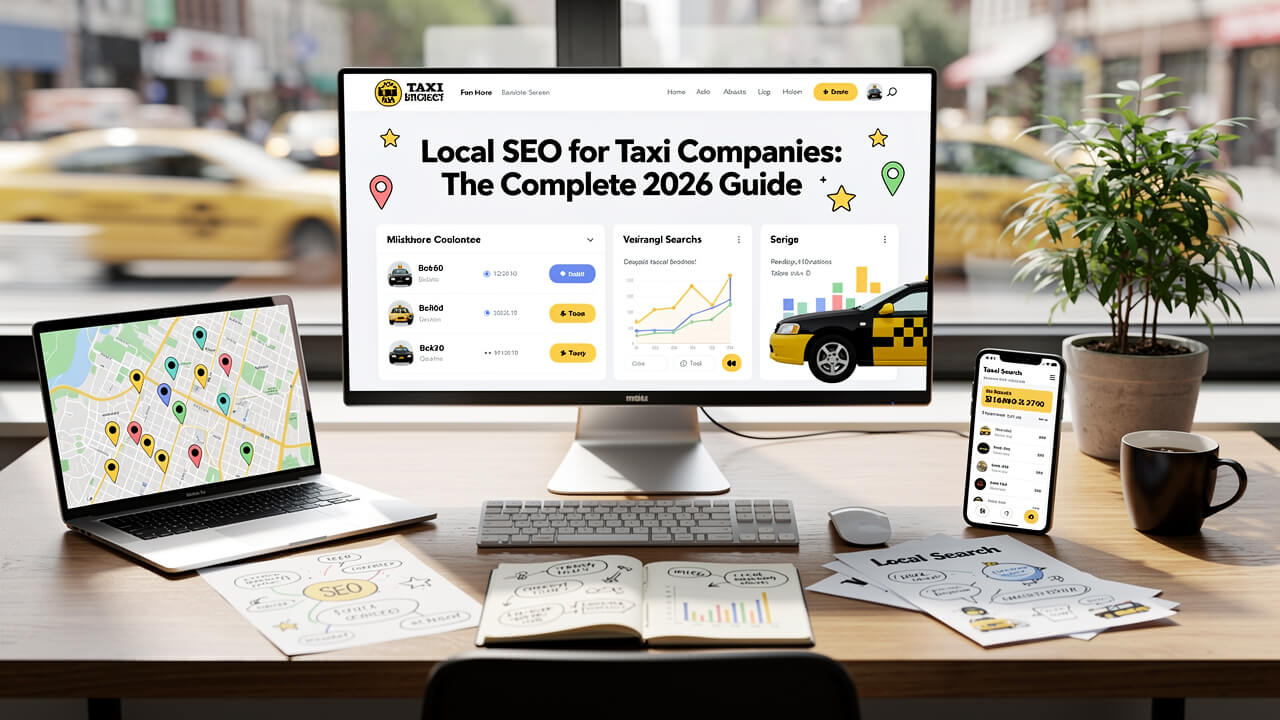
Local SEO for taxi companies is the difference between a phone that rings all day and a phone that stays silent while competitors take the calls.
When someone opens their phone and searches “taxi near me” or “airport transfer,” Google shows only a handful of results — and if your business isn’t one of them, that ride, and that revenue, goes to someone else. This guide breaks down exactly how taxi and private hire businesses can build lasting visibility in Google Maps, capture high-intent local searches, and turn search visibility into booked rides.
What Is Local SEO and Why Taxi Companies Need It
Local SEO is the practice of optimizing your online presence so your business appears when people search for services near their location. For a taxi company, this isn’t optional — it’s the primary channel through which new riders find you. Unlike national e-commerce SEO, which chases broad keyword volume, taxi SEO is narrowly focused: rank in the local 3-pack, get found for location-specific searches, and convert that visibility into phone calls or online bookings.
The businesses winning local search today share a pattern — they treat their Google Business Profile, website, and content as one connected system, not three separate projects. A taxi firm that only claims its Maps listing but ignores its website will plateau quickly. A firm that builds all three together dominates.
How Customers Search for Taxis Locally
Understanding search behavior is the foundation of any local SEO strategy. Riders rarely browse — they search with intent and pick from what’s immediately visible.
“Taxi Near Me” and Voice Search Trends
Searches like “taxi near me,” “airport taxi,” and “24/7 taxi service” are almost always made on mobile devices, often while already needing a ride. These are high-intent local phrases, meaning the searcher is ready to book, not researching options. Voice search is accelerating this trend — queries through smart assistants tend to be conversational, such as “book me a taxi to the airport” or “find a taxi near me now.”
AI Search and Google AI Overviews Impact
Search is also shifting toward AI-generated summaries. Google AI Overviews and other AI search tools pull from structured, consistent business data — accurate hours, service areas, and citations — to generate quick answers. Taxi companies with strong NAP consistency and clear service descriptions are more likely to be cited in these AI-generated results.
Local Keyword Research for Taxi Businesses
Keyword research for taxi companies isn’t about volume — it’s about matching how real riders phrase urgent, location-based needs.
Local Keywords (City and Area-Based)
These target the towns, suburbs, and postcodes you actually serve. Each service area should ideally have its own supporting content rather than relying on a single homepage to rank everywhere.
Service Keywords (Airport Transfer, 24/7 Taxi, etc.)
Service keywords describe what you offer: airport transfer, corporate travel, late-night rides, or private hire.
Intent Keywords (Book Online, Near Me)
Intent keywords signal a searcher is close to booking — phrases like “book taxi online” or “reliable taxi service near me.”
Local SEO Ranking Factors for Taxi Companies
| Ranking Factor | Impact on Local Visibility | Priority |
| Google Business Profile completeness | Very High | Must-do |
| NAP consistency across directories | Very High | Must-do |
| Review quantity, recency & sentiment | High | Must-do |
| Location-specific landing pages | High | High |
| Mobile speed & click-to-call | High | High |
| Schema markup (LocalBusiness, FAQ) | Medium | Medium |
| Local citations & directory listings | Medium | Medium |
| Backlinks from local/industry sites | Medium | Ongoing |
| Blog content targeting local intent | Medium | Ongoing |
| Call tracking & analytics | Low direct, high strategic value | Ongoing |
Google Business Profile Optimization for Taxi Firms
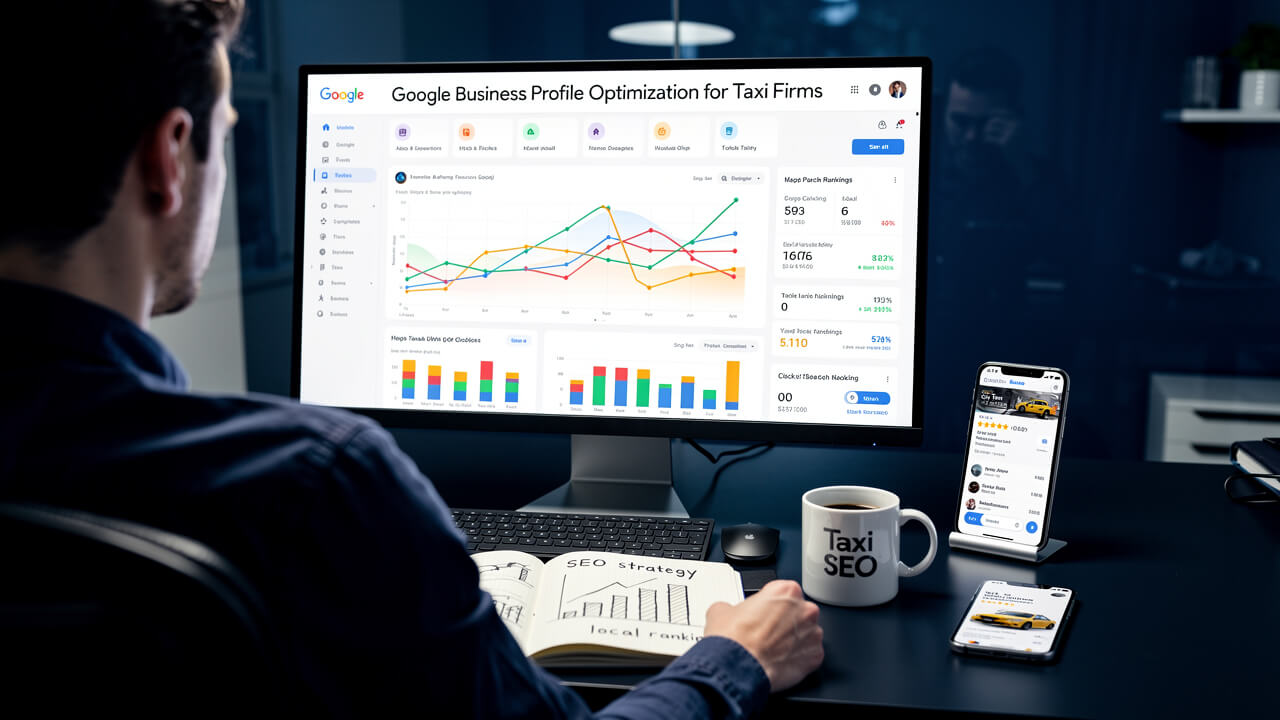
Your Google Business Profile (GBP) is the single most important local SEO asset a taxi company owns.
NAP Consistency
Your Name, Address, and Phone number must match exactly across your website, GBP, and every directory listing. Inconsistent NAP data confuses Google’s local ranking algorithm.
Photos, Posts, and Service Area Setup
Upload genuine photos of your vehicles and branding. Correctly configure whether your business appears as a storefront or as a service-area business — many taxi companies get this wrong.
Managing Reviews for Higher Ranking
Review quantity, recency, and sentiment are heavily weighted local ranking signals. Respond to every review — including negative ones, with a calm, solution-focused reply.
Building Location-Specific Landing Pages
City and Service-Area Pages
Create a page per major town or postcode you cover — never duplicate the same page with only the city name swapped.
Airport and Corridor/Route Pages
High-value routes deserve their own pages with honest ETAs and pricing cues.
On-Page SEO Essentials for Taxi Websites
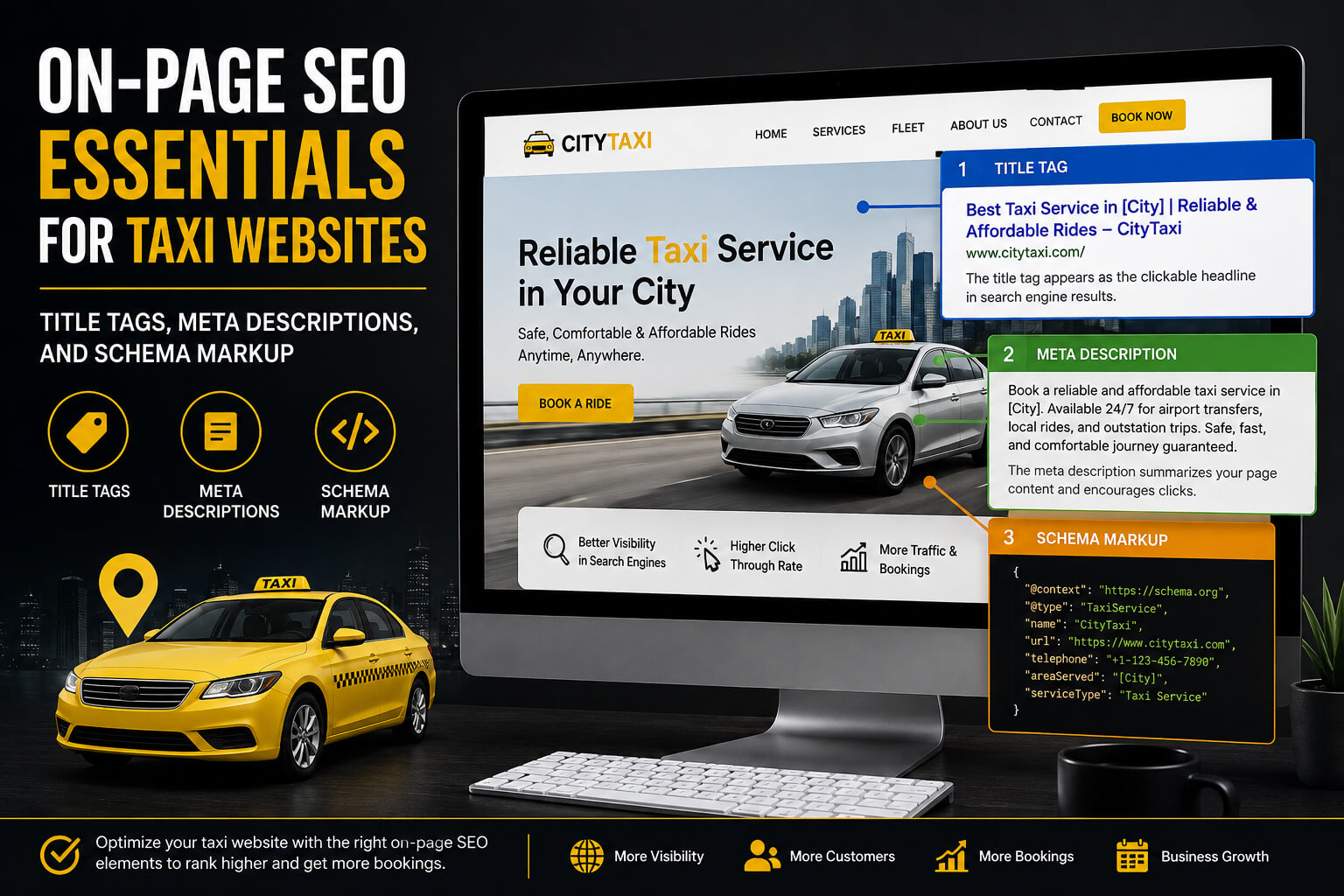
Title Tags, Meta Descriptions, and Schema Markup
Add schema markup — specifically LocalBusiness and TaxiService structured data — so Google and AI tools can accurately parse your services.
Mobile Speed and Click-to-Call Optimization
Pay attention to Core Web Vitals metrics like Largest Contentful Paint, since slow-loading mobile pages hurt rankings and lose impatient riders.
Local Citations and Backlink Building
Citations reinforce your legitimacy to Google’s local algorithm. Backlinks from hotels, event planners, and corporate travel coordinators — alongside visible licensing and insurance proof — build E-E-A-T signals.
Content Strategy: Blogs That Support Local Rankings
Short, useful posts that answer real questions perform best, plus seasonal content around holiday travel spikes or festival demand.
Tracking and Measuring Local SEO Results
Track keyword rankings, traffic sources, and call conversions. Call tracking tools let you separate Maps calls from website and paid-ad calls.
Common Local SEO Mistakes Taxi Companies Make
- Not having a properly optimized website at all
- Ignoring local landing pages
- Inconsistent NAP data
- Fake or purchased reviews
- Static websites with no fresh content
- Poor mobile experience
- Duplicate GBP profiles across depots
What Results Typically Look Like
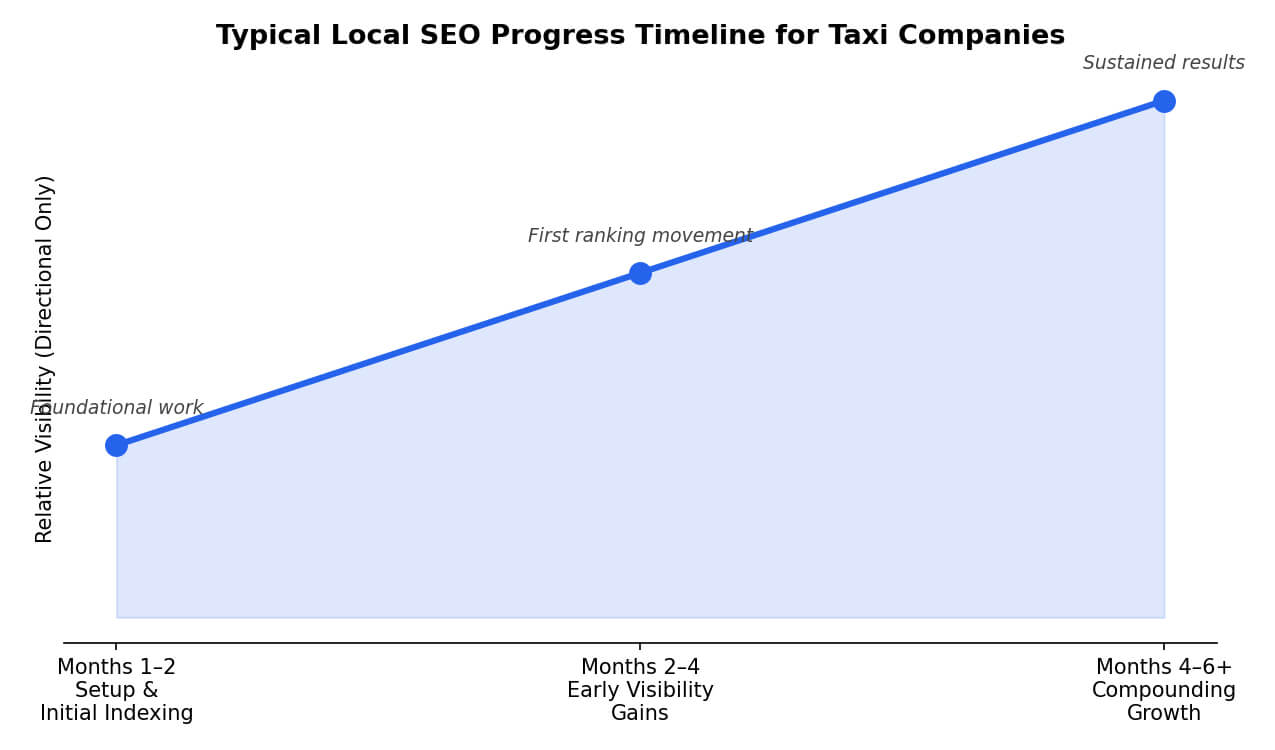
Local SEO is a gradual, compounding process rather than an instant switch. Based on general industry patterns, businesses that consistently execute the fundamentals — a complete Google Business Profile, consistent NAP data, location-specific pages, and steady review growth — tend to see visibility improve in stages: initial movement in map pack impressions within the first couple of months, followed by more consistent ranking positions and call volume as citations, reviews, and content accumulate. The exact scale of improvement varies significantly by market competitiveness, existing site authority, and how consistently the strategy is executed — so treat any specific percentage figure you see elsewhere with caution unless it comes from a verified, sourced case study.
Step-by-Step: How to Get Started with Local SEO
- Audit your current presence.
- Build location landing pages.
- Optimize on-page and technical SEO.
- Publish consistent content.
- Set up call tracking.
FAQs About Local SEO for Taxi Companies
How long does it take to rank in Google Maps for a taxi service? Timelines vary by market, but many businesses see initial movement within the first couple of months and more sustained gains over several months of consistent work.
Do taxi companies need a blog? Yes — short, question-based local content.
How important are reviews? Very — quantity, recency, and sentiment are heavily weighted local ranking factors.
Should taxi companies invest in paid ads? Paid Local Services Ads can work well layered on top of a strong organic foundation.
Read This Blog: https://linkneon.com/natural-seo-services-guide/
Final Thought
Local SEO for taxi companies isn’t a one-time project — it’s an ongoing system built on three connected pillars: an accurate, well-maintained Google Business Profile, location-specific website content, and consistent measurement of what’s actually driving calls. Riders are already searching for a taxi near them right now — the question is simply whether your business is the one Google shows them, or the one they never find.