

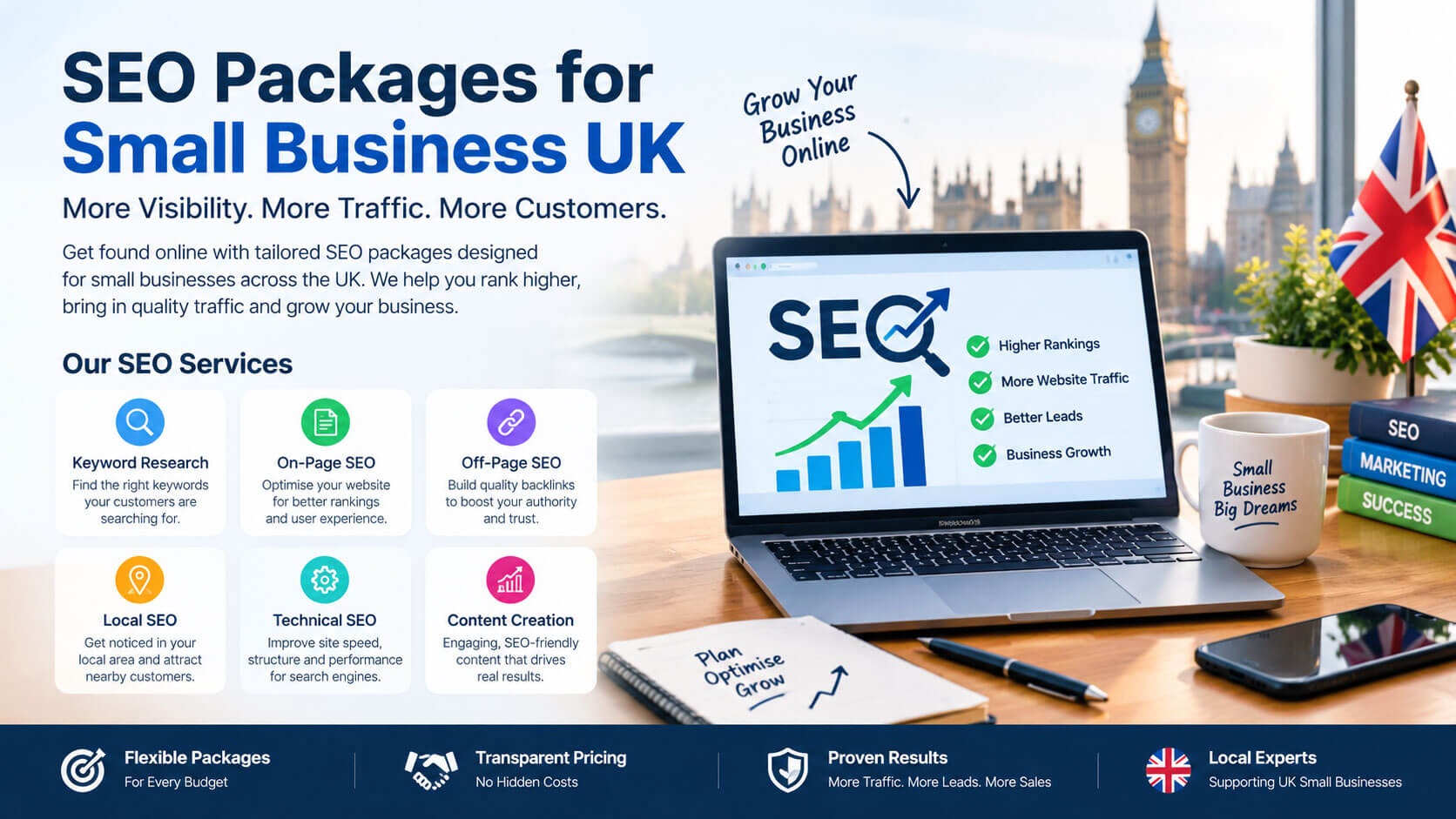
For small businesses in the UK, having a website is only the first step towards attracting customers online. Your potential customers also need to find that website when they search for the products or services you offer. This is where SEO packages for small business UK can make a difference.
A well-planned search engine optimisation (SEO) campaign can improve your website’s organic visibility, attract relevant organic traffic and help generate more enquiries and sales. However, not every business needs the same services. A local tradesperson may benefit most from local SEO, while an online retailer may need technical SEO, product optimisation and a broader content strategy.
The challenge is choosing a package that fits your goals without paying for unnecessary services. This guide explains what small business SEO packages include, compares five illustrative monthly budgets from $500 to $5,000, and shows you how to select a plan that makes sense for your business.
What Are SEO Packages for Small Businesses?
An SEO package combines services designed to improve a website’s visibility in organic search results. Businesses typically pay an SEO agency or consultant a monthly fee in exchange for an agreed scope of work.
Depending on the package, this work may include keyword research, technical SEO, on-page optimisation, content improvements, local search optimisation and performance reporting. Some providers also offer digital PR and link-building activities.
For example, a plumber serving customers in Manchester may need stronger local search visibility, well-optimised service pages and an accurate Google Business Profile. A UK-wide ecommerce business, on the other hand, may need help improving hundreds of product pages and category pages.
Both businesses need SEO, but their priorities are different. The best package starts with the website’s current condition, the audience it needs to reach and the business outcomes it wants to achieve.
Why Is SEO Important for Small Businesses in the UK?
SEO helps businesses appear when people search for relevant products, services and information. It can connect your website with potential customers who are already interested in what you offer.
Unlike paid advertising, organic search traffic does not involve paying for every click. However, SEO is not free: effective campaigns require time, expertise, content development and ongoing improvements.
For a small business, attracting relevant visitors is usually more valuable than simply increasing traffic. A service page that brings potential customers who are ready to request a quote may be more useful than a popular article that attracts people who are unlikely to buy.
SEO can also help businesses build brand credibility, answer customer questions and compete for specific searches that larger brands may overlook. Results depend on competition, search demand, website quality and the work completed, so SEO should be viewed as a long-term marketing investment rather than a guaranteed source of immediate sales.
What Is Included in a Small Business SEO Package?
Although packages vary between providers, most cover some combination of research, optimisation, technical improvements and reporting. Understanding these services makes it easier to compare proposals and decide what your website actually needs.
1. Keyword Research and Search Intent
Keyword research identifies the phrases potential customers use when searching for your products or services. A good strategy considers search intent, relevance, competition and search demand.
For example, someone searching for “what is boiler servicing” is probably looking for information. A person searching for “boiler servicing company Leeds” is more likely to be comparing local providers.
Your website should have pages that match these different needs. Keyword mapping helps assign suitable search terms to relevant pages, reducing unnecessary overlap and creating a clearer website structure.
2. On-Page SEO
On-page SEO improves individual pages so that they communicate their purpose clearly to users and search engines. This work may involve SEO titles, meta descriptions, headings, internal links, image alt text and content organisation.
The aim is to make each page useful and relevant, not to repeat the same keyword as often as possible. Natural language, clear explanations and a structure that helps readers find answers are more valuable than keyword stuffing.
3. Technical SEO
Technical SEO addresses issues that may prevent search engines from crawling, understanding or indexing important pages. An SEO audit can identify broken links, redirect problems, duplicate URLs, incorrect canonical tags and other technical weaknesses.
Page speed, mobile usability and indexing issues may also need attention. The appropriate level of work depends on the website: a small business site may require a few targeted fixes, while a large ecommerce store may need ongoing technical monitoring.
4. Local SEO
Local SEO helps businesses reach customers in specific towns, cities or service areas. It can include Google Business Profile optimisation, local keyword research, relevant location pages and guidance on managing genuine customer reviews.
Accurate business information and useful service pages help customers understand where you operate and what you provide. Location pages should offer meaningful information rather than repeating nearly identical content for multiple towns.
5. Content Creation and Topical Coverage
Useful SEO content answers customer questions, explains services and helps visitors make informed decisions. Depending on the package, an agency may improve existing pages, create new service pages or develop supporting articles around important topics.
A well-organised content strategy builds relevant coverage around the services your business offers. However, publishing more articles does not automatically produce better rankings. Content should be accurate, original, relevant to the audience and aligned with search intent.
6. Link Building and Website Authority
Relevant links from reputable websites can help people discover your business and provide useful context about its reputation. Some packages include digital PR, outreach or other link-building activities.
Ask providers to explain their methods and reporting. Be cautious of promises involving large numbers of cheap backlinks, automated link schemes or guaranteed rankings. The quality and relevance of the approach matter more than an impressive-looking link count.
7. Reporting and Performance Tracking
SEO reporting connects SEO activities with the results that matter to your business. Depending on your website and tracking setup, reports may cover organic clicks, search impressions, relevant keyword trends, technical issues, enquiries and sales.
A useful report should explain what has been completed, what the results suggest and what the agency plans to prioritise next. This makes it easier to assess whether the campaign is supporting your business goals.
SEO Packages for Small Business UK: Pricing Comparison
SEO pricing in the UK depends on the provider, competition, website size and amount of work required. To help you compare options, the following five packages use illustrative monthly budgets in US dollars. They are planning examples, not verified UK agency quotations or market averages.
Table 1: SEO Package Prices and Typical Services
| SEO package | Illustrative monthly budget | Typical focus | Suitable for |
| Starter SEO | 750 | Basic audit, keyword research, priority on-page fixes and reporting | Small websites needing essential improvements |
| Local SEO | 1,500 | Local keyword targeting, Google Business Profile and service-area optimisation | Businesses serving local customers |
| Growth SEO | 2,500 | Broader keyword targeting, content improvements and technical SEO | Businesses expanding organic visibility |
| Ecommerce and National SEO | 3,500 | Product and category optimisation, technical work and wider-market targeting | Online retailers and UK-wide businesses |
| Advanced SEO | 5,000 | More extensive strategy, technical analysis, content operations and digital PR | Competitive markets and complex websites |
These packages represent different levels of potential scope, not fixed industry standards. One provider may include content writing in its monthly fee, while another may charge separately for content, developer support or digital PR.
Because the target audience is in the UK, ask agencies for quotations in pounds sterling (£) as well. Confirm whether VAT, software, content production and implementation costs are included before comparing prices.
Graph 1: SEO Package Pricing Comparison
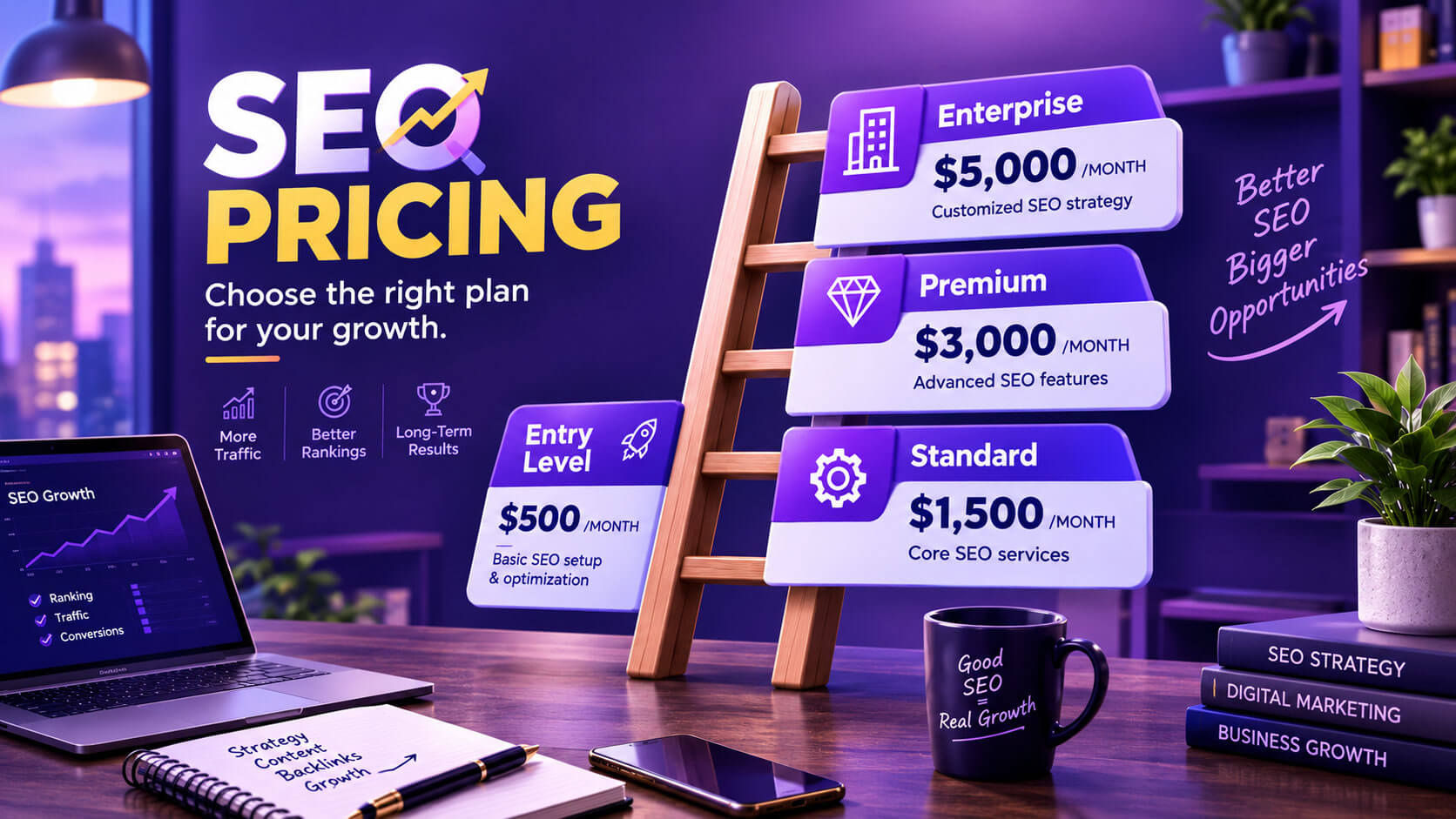
The pricing visual compares the five package levels using the midpoint of each illustrative price range.
Accessible chart data: Starter SEO, $625; Local SEO, $1,125; Growth SEO, $2,000; Ecommerce and National SEO, $3,000; Advanced SEO, $4,250. These are calculated comparison values, not actual agency prices.
The main point is that a higher budget should fund additional work that your business genuinely needs. It should not simply mean paying more for the same deliverables.
Which SEO Package Should You Choose? A Quick Decision Guide
Now that you understand the main services and pricing levels, the next step is to match a package to your business situation. Your target audience, website condition and growth plans should guide this decision.
Choose a Package Based on Your Business Needs
| Your situation | Suggested package | Illustrative monthly budget |
| Your website needs basic SEO improvements | Starter SEO | 750 |
| You mainly serve customers in a local area | Local SEO | 1,500 |
| You want broader organic visibility and better content coverage | Growth SEO | 2,500 |
| You sell online or target customers across the UK | Ecommerce and National SEO | 3,500 |
| Your market is highly competitive or your website is complex | Advanced SEO | 5,000 |
Four Steps to Selecting the Right Plan
Step 1: Define your target market. If your customers come mainly from a particular town or city, Local SEO may be the best starting point. If you sell products nationally, you may need ecommerce SEO or national SEO services.
Step 2: Assess your website. Consider whether your main issues involve technical errors, weak service pages, limited content or poor local visibility. An SEO audit can help establish which problems deserve attention first.
Step 3: Match the scope to your goals. If you need a few priority improvements, a focused package may be sufficient. If you need ongoing content development, wider keyword coverage and technical work, a more comprehensive campaign may be appropriate.
Step 4: Check the actual deliverables. Ask what work will be completed each month, who will implement recommendations, how progress will be reported and which costs fall outside the quoted fee.
A practical approach is to start with the least expensive package that can realistically address your priorities. Review progress regularly and increase the scope when your goals and performance data justify further investment. Avoid choosing a package solely because an agency promises faster rankings.
Local SEO vs National SEO: Which Do You Need?
Your target market determines which SEO activities deserve the most attention. Local SEO is designed for businesses that serve a defined geographical area, while national SEO targets a broader audience across the UK.
Local SEO is often relevant for tradespeople, clinics, restaurants and professional service providers. It may involve improving a Google Business Profile, strengthening local service pages and making business details consistent.
National SEO is more suitable for businesses selling throughout the UK, including ecommerce stores and online service providers. It may require broader keyword research, stronger product or category pages, more extensive content and closer competitor analysis.
Some businesses need both approaches. A company based in Birmingham that serves customers nationwide, for example, may want to attract local customers while also ranking for specialist services across the country.
The right choice depends on how customers find and purchase your services, not simply on which SEO package sounds more comprehensive.
Graph 2: Illustrative SEO Growth Over Six Months
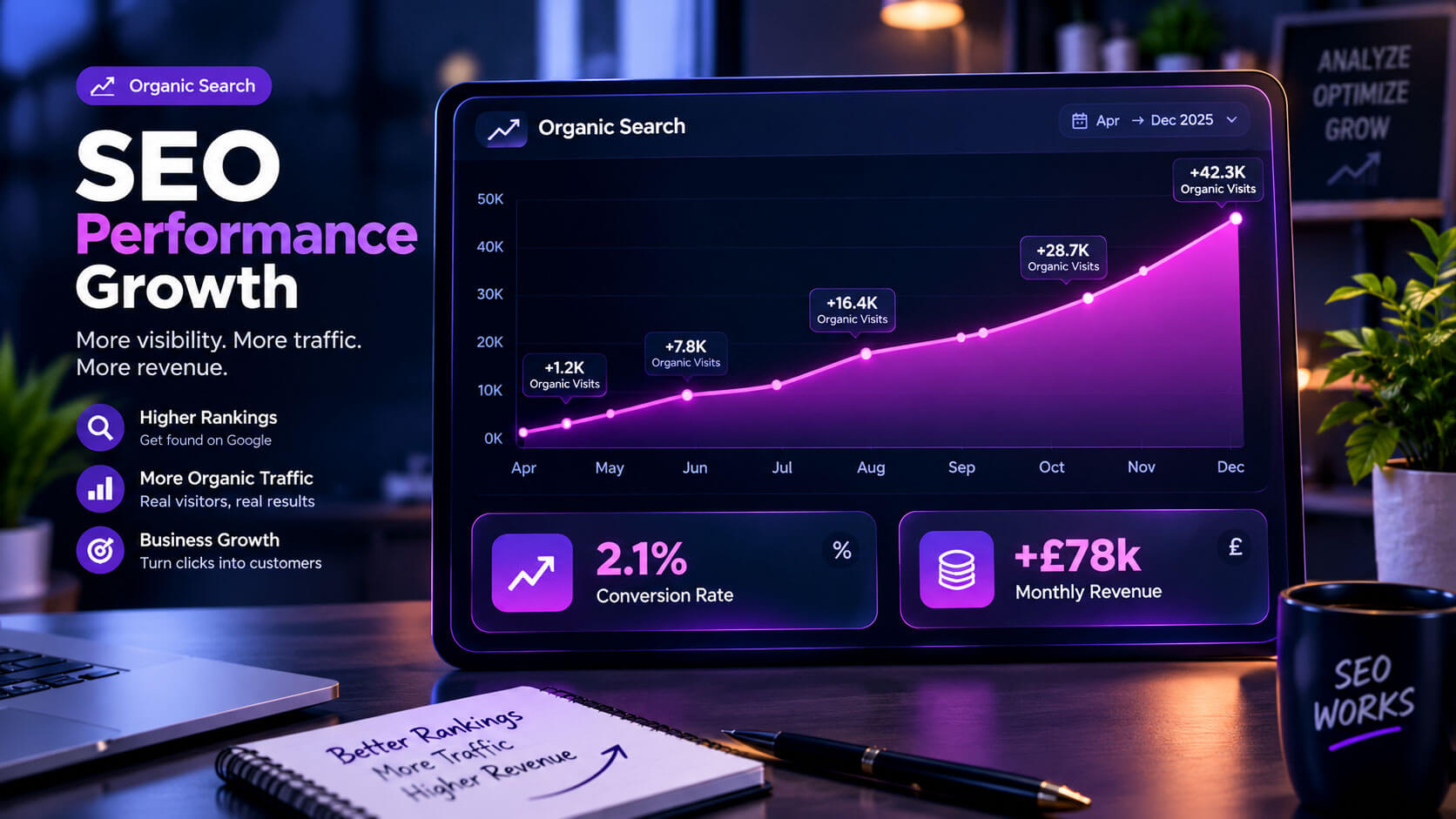
This visual illustrates one hypothetical pattern of organic traffic growth and conversion growth over six months. It does not show real client performance or predict what your business will achieve.
Accessible chart description: In the example, the organic traffic index rises from 100 in Month 1 to 170 in Month 6, while the conversion index rises from 100 to 168. These are hypothetical index values, not actual traffic figures, client results or a forecast. Real SEO performance may improve, remain flat or decline.
Traffic and conversions should also be measured separately. More visitors do not automatically produce more enquiries or sales, so use analytics and conversion tracking to understand whether the campaign is attracting relevant potential customers.
How Long Does SEO Take to Show Results?
SEO requires time because search engines need to discover and process changes, while businesses need time to improve their pages and compete for relevant searches. Some technical improvements may have an effect relatively quickly, but meaningful progress in competitive markets can take several months or longer.
The timeline depends on factors such as website history, technical condition, competition, content quality and how quickly recommendations are implemented. The following schedule is a planning guide rather than a guaranteed timetable.
Table 2: Typical SEO Work and Review Milestones
| Stage | Common activities | What to review |
| Month 1 | Discovery, baseline measurement, keyword research and audit | Technical issues, current traffic and priority pages |
| Months 2–3 | Implementing fixes, on-page optimisation and initial content improvements | Indexing, impressions, click trends and completed work |
| Months 3–4 | Expanding useful content and improving internal links | Relevant keyword visibility and engagement |
| Months 4–6 | Refining pages, addressing content gaps and agreed outreach | Traffic quality, enquiries and conversion trends |
| Month 6 onward | Reviewing performance and adjusting the strategy | Progress against goals, return on investment and next priorities |
Use these stages to structure reviews, not to judge success against arbitrary deadlines. If the data shows that important pages are not being indexed or that visitors are not converting, the strategy may need to change.
How to Evaluate an SEO Agency
Choosing a suitable package is only part of the decision. The provider must also be capable of delivering the agreed work and explaining how that work supports your objectives.
When comparing agencies, focus on the following points:
- Scope of work: Confirm which pages, technical tasks, content deliverables and reporting activities are included.
- Experience and evidence: Ask for relevant case studies or documented examples, and understand the circumstances behind any reported improvements.
- Ownership and access: Maintain appropriate control of your domain, website and analytics accounts.
- Exclusions and extra costs: Check whether content writing, development, digital PR, software and VAT are charged separately.
A reliable agency should explain its approach clearly, provide regular reports and be honest about uncertainty. No provider can guarantee a particular Google ranking because search results depend on many factors outside an agency’s control.
Common SEO Package Mistakes to Avoid
One common mistake is choosing the cheapest package without checking whether it covers the work your website needs. A low-cost plan may be appropriate for a small number of improvements, but it may not provide enough resources for a competitive national campaign.
The opposite problem is paying for an advanced package before your business needs that level of work. A larger monthly fee is not automatically better if the additional services have little relevance to your goals.
Be cautious of promises of instant rankings, guaranteed number-one positions or hundreds of backlinks at unusually low prices. Such claims can distract from the quality of the strategy and the value of the deliverables.
It is also worth avoiding content created purely to increase publishing volume. Every page should have a clear purpose and provide useful information. Improving existing pages may sometimes be more effective than publishing new articles.
Finally, do not treat SEO as a one-time task. Search demand, competitors and website requirements change, so ongoing SEO monitoring, measurement and improvement are important parts of a sustainable strategy.
Frequently Asked Questions
How much do SEO packages for small businesses in the UK cost?
Costs vary according to the provider, website, competition and scope of work. The 5,000 monthly budgets in this guide are illustrative examples, not verified market averages. Ask UK agencies for a detailed quotation in pounds sterling and check whether VAT and additional services are included.
Is a $500 SEO package enough for a small business?
It may be suitable for a focused campaign involving an audit, keyword research and priority on-page improvements. It may not cover extensive content production, complex development work or a competitive national strategy. The actual deliverables matter more than the package name.
Is local SEO better than general SEO?
Local SEO is often the priority for businesses serving customers in specific locations. Broader SEO may be more appropriate for businesses targeting customers throughout the UK or selling online. Some companies benefit from combining both approaches.
Can I do SEO myself?
Yes. Business owners can learn keyword research, improve page content, use Google Search Console and maintain a Google Business Profile. More complex technical problems and competitive campaigns may require specialist support. You can also manage some tasks internally and hire an agency for specific needs.
Should I choose a monthly SEO package or a one-time audit?
A one-time SEO audit can identify problems and provide a prioritised action plan. A monthly SEO package is more appropriate when you need ongoing implementation, content improvements and performance reviews. An audit alone will not improve your website unless its recommendations are acted upon.
Are SEO results guaranteed?
No. Search engines change, competitors improve their websites and customer demand fluctuates. A provider should commit to agreed deliverables, transparent reporting and responsible SEO practices rather than guarantee a specific ranking or number of leads.
What should an SEO report include?
A useful SEO report explains the work completed, organic clicks and impressions, relevant keyword trends, indexing or technical issues, and conversions where tracking is available. It should also explain what the data means and what the next priorities will be.
Read More: https://linkneon.com/guest-post-backlinks/
Final Thoughts: Choosing the Right SEO Package for Your Business
The right SEO package for a small business is the one that addresses your website’s most important needs and supports your business goals within a realistic budget. Starter SEO may be sufficient for essential improvements, Local SEO can help businesses reach nearby customers, and larger campaigns can support wider content, technical and national search requirements.
Before committing to a provider, compare the proposed strategy, deliverables, experience, reporting and total cost. Make sure you understand what is included, what will be charged separately and how progress will be evaluated.
Your next step: Review your website’s current performance, identify your main business goals and request a tailored SEO proposal. Choose a plan that prioritises meaningful improvements, measures results transparently and can adapt as your business grows.