

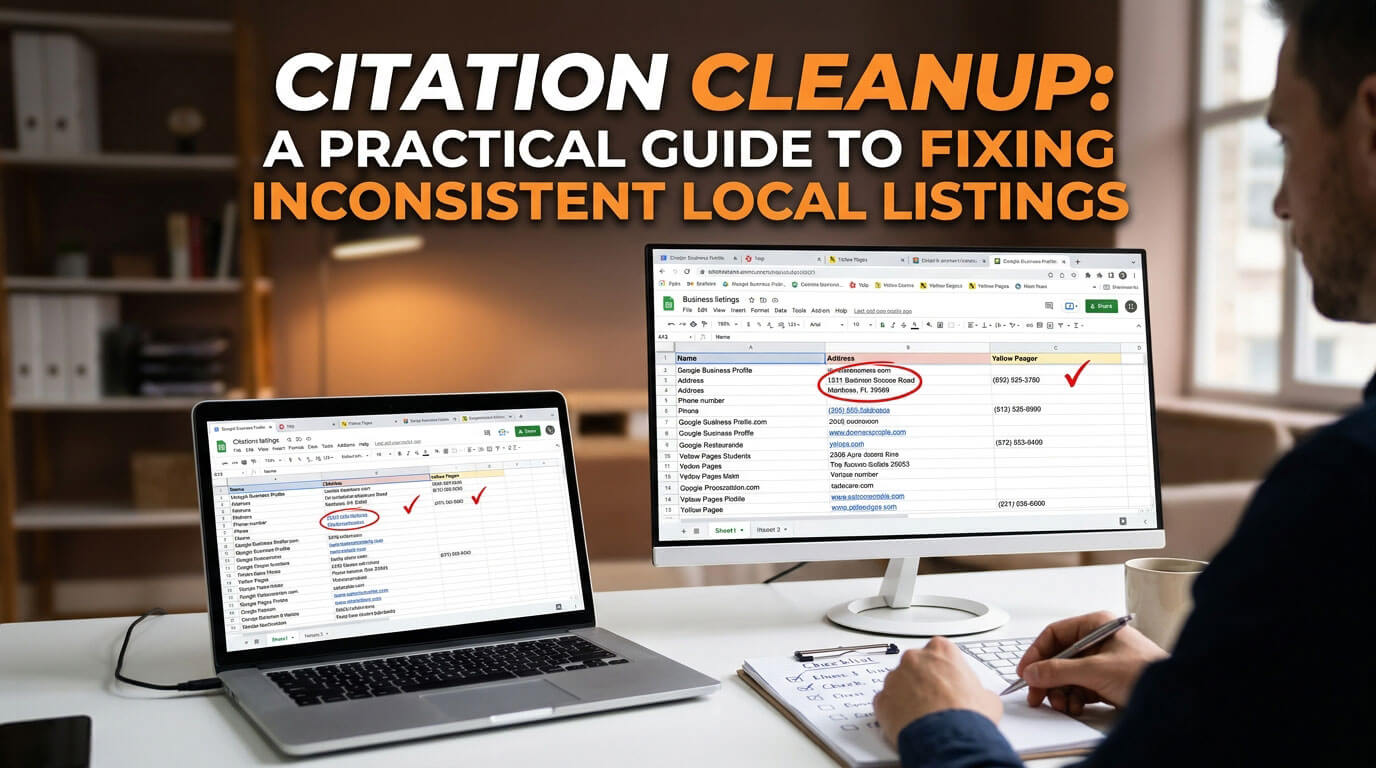
Citation cleanup is the process of finding and correcting every online listing that shows your business name, address, or phone number incorrectly. A local citation is any online mention carrying those NAP details. After auditing hundreds of profiles, I treat each public listing as a vote of legitimacy that ranking systems quietly weigh.
This guide walks through citation cleanup from start to finish: setting a source of truth, running a citation audit, fixing your Google Business Profile, correcting data aggregators, removing duplicate listings, and tracking results. It also compares manual review with automation tools, so you can decide what to handle in-house and what to outsource.
What Is Citation Cleanup and Why It Matters for Local SEO
Most owners treat a local citation as a simple directory entry, yet my audits keep proving otherwise. Every online mention of your name, address, and phone number tells search engines whether your business information deserves trust. Google itself says businesses with complete and accurate info are more likely to show up in local search results.
Citation cleanup is the correction work behind it. It tracks duplicates, outdated information, and NAP inconsistencies across major directories, maps, and review platforms, replacing mixed signals with consistent citations that protect local rankings and visibility.
Here’s the contrarian part: it is rarely a one-time project. Directories refresh, aggregators resync, and old data resurfaces, so several rounds of correction are often needed before potential customers consistently see accurate details.
Adding new listings before cleaning existing ones fixes nothing. Progress comes from pruning duplicate listings, restoring consistent NAP data across your online footprint, and letting that professionalism feed the entity recognition that quietly shapes your local SEO strategy.
The Cost of Messy Citations
Rankings rarely collapse overnight; they erode. When a business shows several phone number versions across local directories, review sites, and social media profiles, search engines receive conflicting signals, and local search rankings slowly slip.
The damage usually surfaces through customer frustration first: callers dialing a dead line, wrong hours posted, or a stale business address sending visitors elsewhere. Those existing citations fracture brand trust quickly.
Bad data spreads faster than corrections. Data aggregators feed smaller sites, which clone existing citations into duplicate listings. You can’t simply remove one public listing; you must merge records and repair your whole online footprint.
The cost isn’t only algorithmic. Wrong opening hours on a health directory or map app send customers to a closed door and raise doubts about legitimacy. Consistent NAP data and accurate listings signal professionalism, anchoring any local SEO strategy.
What Causes Citation Inconsistency
Most inconsistency is not caused by careless owners; it is caused by success. Every online mention a company earns creates another copy of its business details, and each copy drifts independently once the original changes.
A single address can easily appear several ways online. Local news sites may quote an old suite number, chamber of commerce websites may keep a former business name, and industry-specific sites may freeze seasonal hours long after they change.
Structural causes run deeper. Business directories scrape each other, so one wrong NAP in a website footer spreads fast. Online directories also force a category choice, swap photos, and rewrite a local citation for relevance.
Signs Your Business Needs Citation Cleanup
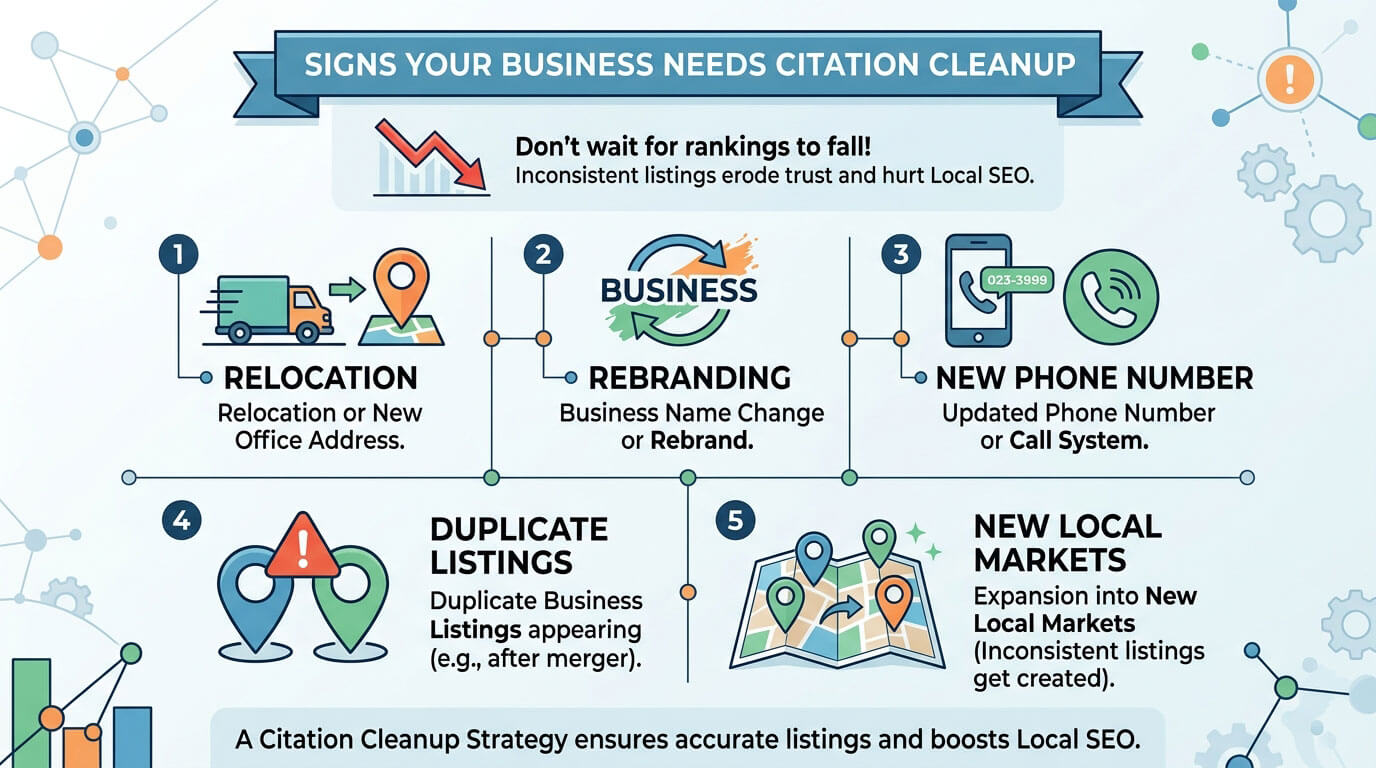
Waiting for rankings to fall is the costliest signal to act on. By then, inconsistent citations have eroded credibility, and local search performance reflects months of inaccurate information that customers trusted before search engines noticed.
The triggers are easier to spot:
- A relocation or new office address
- A rebrand or business name change
- A new phone number or call system
- Duplicate business listings surfacing after a merger
- Expansion into a new local market, where fresh listings often get created with slightly different details
Deciding between DIY and hiring help depends on scale. A step-by-step guide handles a few errors, but a brand presence across hundreds of online listings needs a citation cleanup strategy, so corrections actually support local SEO.
Step 1: Establish a Source of Truth for Your NAP
Most failed citation cleanup projects I’ve inherited collapsed before anyone edited an entry. Teams fixed errors without agreeing on one canonical NAP, so corrections drifted. Your source of truth should come from legal sources, never staff memory.
Pull the registered name from Secretary of State filings or other official state records. Lock a formatting standard: choose 123 Main Street or 123 Main St. once, because abbreviations multiply.
Phone lines need equal discipline. Publish one stable citation number and keep call tracking numbers elsewhere. Record the website URL, service areas, and old business name in a sheet, so every in-house marketer copies an exact match.
Step 2: Run a Citation Audit
The ranking slumps I’ve traced weren’t caused by competitors. They grew from hidden errors inside legacy records: an old brand, an old address, or a wrong category nobody noticed until a drop in local rankings forced a manual audit.
I start with a structured inventory inside one spreadsheet: every business listing, its URL, status, and notes. Then address-only searches, ZIP code queries, and phone number lookups expose unclaimed pages, likely duplicates, and reviews split across duplicate profiles.
Compare each entry against official records and current NAP information, and run a NAP variations check across state directories, industry-specific directories, and social profiles. The audit report should separate incorrect details from missing information, since the fixes differ.
Step 3: Optimize Your Google Business Profile
Most teams treat the Google Business Profile as one entry among many, yet I examine it first. Its business information becomes the benchmark, so any field misrepresenting the actual business quietly multiplies errors downstream.
After verification clears (Google may use video, phone, text, email, live video call, or postcard, with video now the most common), I open the business dashboard and work through the profile fields: accurate business categories, current hours, website links, relevant services, and useful descriptions written for customers, not machines. Empty fields invite unwanted public edits.
A finished profile filled with useful details persuades searchers. Current photographs supplied by owners outperform stock imagery, and in my experience, map pack impressions and direction requests tend to rise once profiles are complete.
Step 4: Correct Data Aggregators First
Many projects stall when teams chase errors downstream. Data aggregators sit upstream, and smaller sites copy data from them. In the US, fixing Data Axle, Foursquare, and Neustar Localeze first gives you upstream influence over many dependent sites.
Vendor rosters shift, so check that older audit templates still list current aggregators. Factual merged with Foursquare in 2020, Infogroup now operates as Data Axle, and Neustar’s marketing business, which includes Localeze, was acquired by TransUnion in 2021. In my experience, aggregator propagation is slow; full syndication to partner sites can take 2 to 3 months.
So I log each aggregator sync in a tracker, then queue aggregator updates before contacting individual sites. Correcting the source once beats chasing errors everywhere, and it protects the ROI of downstream work.
Step 5: Prioritize Key Listing Platforms
Everyone rushes to Google Maps, but Google cross-references what Apple Maps, Bing Places, Yelp, and Facebook already publish. If those platforms still show an old address, a corrected listing can quietly revert.
Next come the Better Business Bureau, state business registries, niche-specific directories, and local directories where ownership can be claimed and structured citations show inconsistent NAP.
My checklist pairs BrightLocal, Whitespark, and Moz Local scans with manual site: searches on major directories, such as site:yelp.com, to catch listings the tools miss. Then double-checking categories, business hours, photos, customer reviews, and ratings confirms each incorrect citation stays fixed.
Step 6: Claim, Verify and Correct Listings
Clicking “Claim this business” rarely finishes anything. Many failures I audit trace back to obsolete emails blocking account access, so proving business ownership, often through phone verification, becomes the gate before you can correct NAP or update business details.
Highest-priority listings come first; legacy listings wait. Without logins, I submit request forms through directory support channels, log every date, and stay persistent until the publisher confirms the correction.
Once listings are claimed, I skip bulk updates and verify mismatched or incomplete information manually. Consistency across business hours, categories, photos, and reviews follows verification, and routine audits of accessible citations keep listings managed.
Step 7: Remove or Merge Duplicate Listings
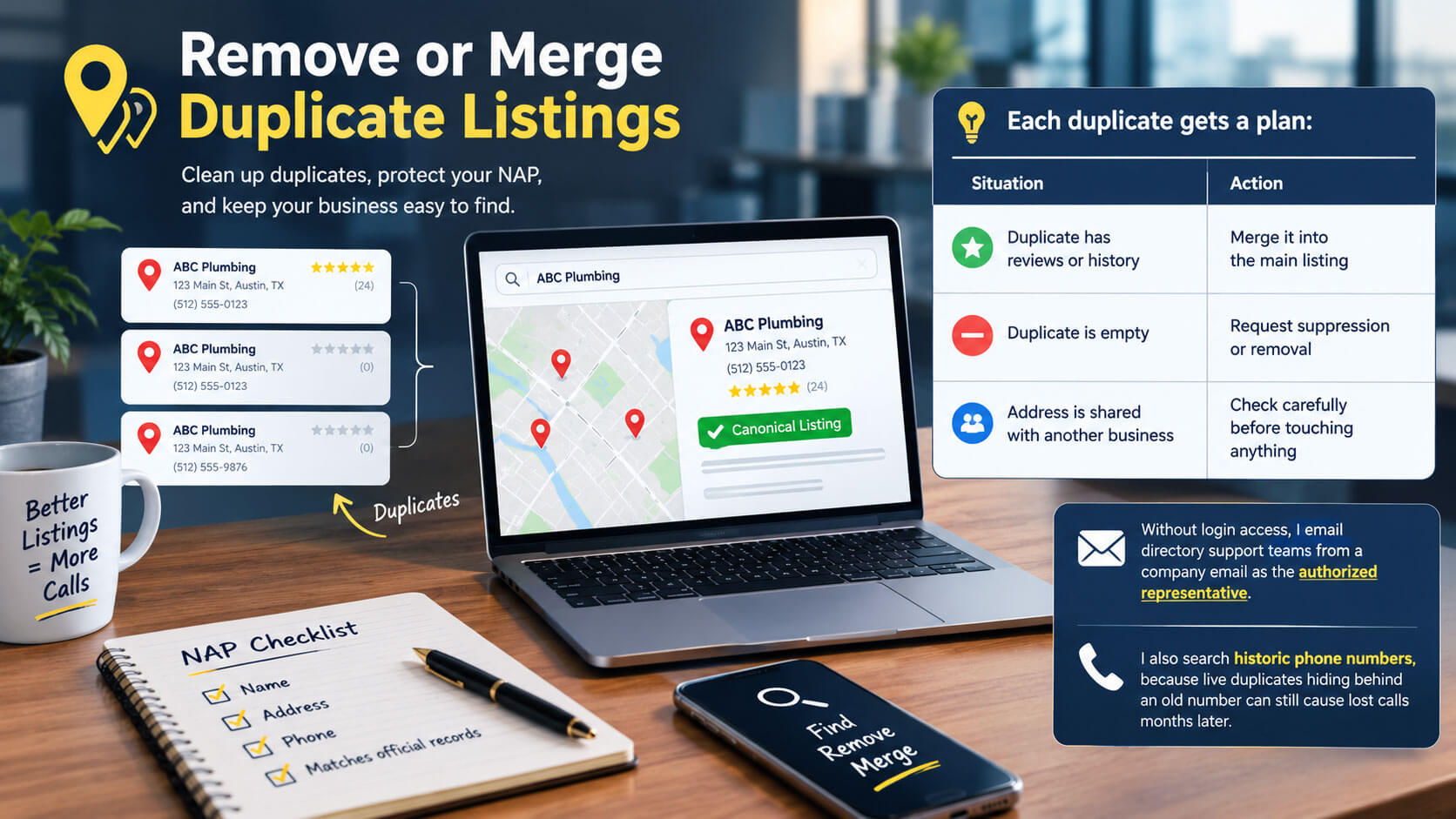
Most duplicate listings I have cleaned were not created by careless owners. They came from older NAP records that aggregators kept distributing, so deleting one copy rarely works, because propagation can re-seed it within weeks.
The fix starts with your source of truth, a canonical NAP matched to official records. Each copy then gets judged:
| Situation | Action |
| Duplicate has reviews or history | Merge it into the main listing |
| Duplicate is empty | Request suppression or removal |
| Address is shared with another business | Check carefully before touching anything |
Without login access, I email directory support teams from a company email as the authorized representative. I also search historic phone numbers, because live duplicates hiding behind an old number can still cause lost calls months later.
Step 8: Manual Outreach to Directories
Every directory has a human gatekeeper, and publishers respond to people, not software. Editors want proof alongside duplicate-removal requests: two different addresses, old phone numbers, and dated closure notices.
Before requesting removal, identify which listing with reviews deserves to survive. Asking editors to merge listings protects unique reviews and history, whereas suppression wipes ranking signals that search engines and customers trust. Keep listing equity intact.
I keep a record of removal requests beside every report, because editors forget. Verification emails from a brand domain earn confidence faster than generic addresses. When directory tools flag multiple listings, revisit the original thread.
Step 9: Track, Verify and Report Changes
A fix is never finished at submission. I’ve seen directories roll back corrected citations weeks later, so every edit earns a log entry: date of submission, current status, and the correct information sent.
Discipline beats tooling. A Google Sheets tracker often works better than project management platforms nobody opens. Weekly, I sort pending publisher requests and prioritize the repairs blocking each follow-up.
Real verification means a live double-check that the corrected listing is showing and indexed. Only verified results reach the final report, alongside completed changes, outstanding tasks, and recommendations. Regular client updates throughout the process keep the summary surprise-free.
Citation Cleanup Timeline and Turnaround
Most clients expect overnight fixes, yet the timeline demands patience. Some directories process changes within one week, while others need two weeks or several attempts before correct information replaces incorrect listings. Aggregator updates take longest, often 2 to 3 months to spread.
Speed depends on protocol, not luck. I plan at least two rounds of manual outreach from a branded email on the company domain, because those follow-ups establish authority faster than mass emails or generic submission forms.
Scope reshapes everything. A single brand with a short list of sites wraps up quickly, but hundreds of duplicate-removal requests take longer. Documented communications show clients exactly where each directory stands every week.
Manual Review vs. Automation Tools
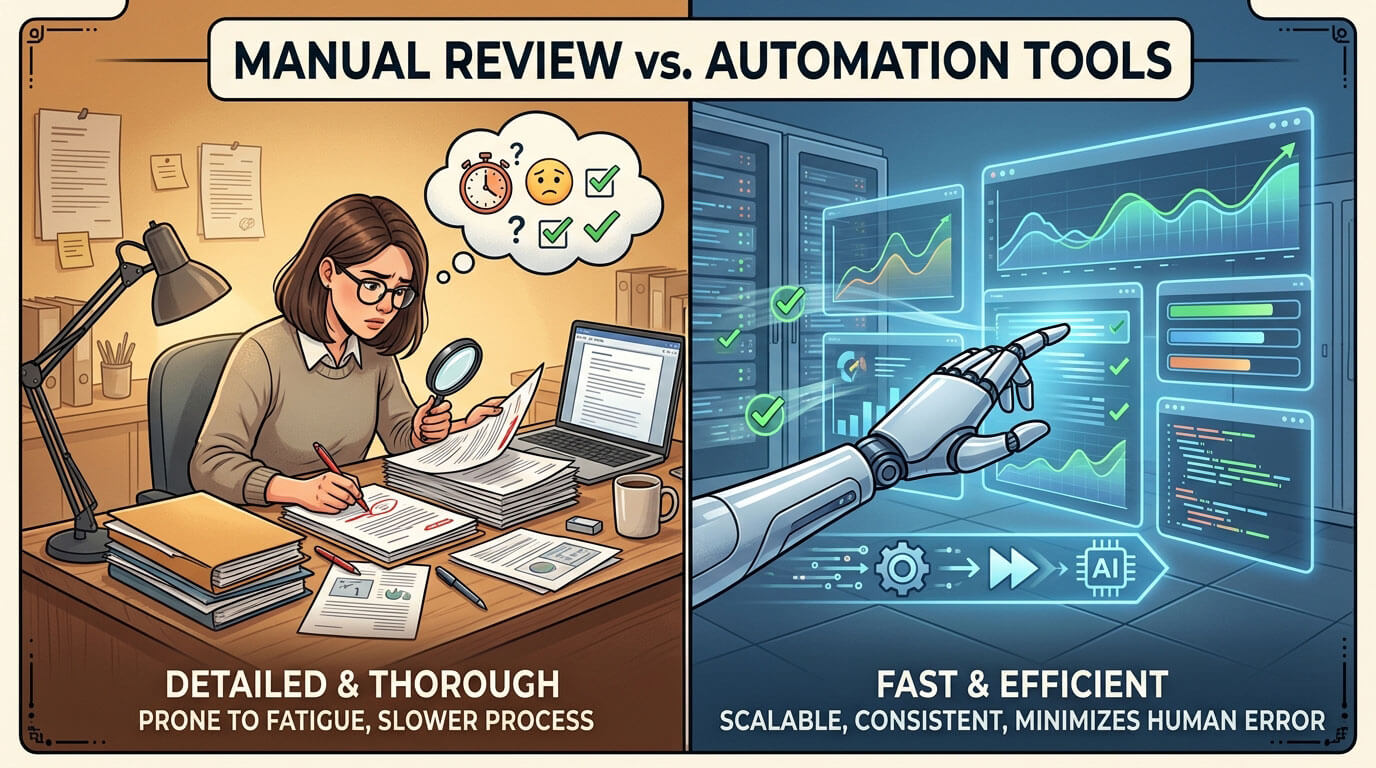
Most citation disasters I’ve inherited were not caused by laziness; they came from overreliance on one dashboard that showed green checkmarks while errors spread across niche directories the local SEO software never scanned.
Automation matters, because pushing one corrected record to hundreds of platforms by hand is time-consuming. Tools deliver speed and efficiency, yet they read data literally, missing the nuances behind a suite number or abbreviated street.
Real accuracy comes from human oversight layered over automated scans. I triple-check every business name mismatch a report flags, because no tool can reliably distinguish a legitimate trading name from a careless typo made years ago.
Where Automation Pulls Ahead
Scanning top platforms like Google Business Profile and Yelp is where software shines. It surfaces inconsistent citation sources within minutes and removes human error from repetitive submissions, which matters for multi-location businesses.
What Manual Review Catches That Tools Miss
A manual review exposes problems no crawler reports: address formatting that passes matching yet confuses drivers, or a listing claimed by a former owner. Fixing these requires judgment, phone calls, and familiarity with platform quirks.
Manual Review vs. Automation at a Glance
| Factor | Manual Review | Automation & Tools |
| Speed | Slow, one listing at a time | Fast, bulk scanning and submission |
| Handling nuance | Strong: reads context and intent | Weak: matches data literally |
| Ownership problems | Resolves claimed or locked listings | Usually flags them without fixing them |
| Scale | Hard to sustain across many locations | Built for multi-location work |
| Main risk | Fatigue and inconsistency | False confidence from clean reports |
Building a Hybrid Workflow That Lasts
Smart teams combine tools with a standardized naming scheme everyone follows. Routine reviews and feedback loops between your team and the software catch drift early, and a quarterly reset keeps the master NAP record trustworthy.
- Lock one master NAP record before running any scan.
- Let software handle discovery and bulk submissions.
- Send flagged mismatches to a person for verification.
- Review niche and industry directories by hand, since tools often skip them.
- Re-audit every quarter and update the master record first.
Key Takeaways
- Clean citations give search engines unambiguous signals about your entity. Treat citation cleanup as a defined project, then protect results with regular monitoring and quarterly checkups.
- Start with Tier 1 platforms such as Google Business Profile, Apple Business Connect, Bing Places, Yelp, and Facebook, then move to industry-specific and city directories.
- Keep one NAP plus your website URL as an exact match on every listing.
- Correct data aggregators early, because they feed many smaller sites.
- Merge duplicates that hold reviews, suppress empty ones, and use manual outreach when logins aren’t available.
- Expect publisher review and verification steps to slow some updates.
- Use local SEO software for discovery, but keep manual review for legacy brand changes, franchise records, and multi-location data.
- Consistent citations may help Google confirm your business as a distinct entity and understand it better.
- Complete directory profiles with accurate categories, photos, and a clear description.
- Measure progress through GBP calls, direction clicks, referral traffic, branded searches, and local pack rankings, tracked with tools like Google Analytics and CallRail.
- Update citations immediately after a move, name change, or phone change.
- A single-location business can handle citation cleanup in-house, while multiple locations, rebrands, or extensive errors usually justify an experienced agency.
- Citation cleanup is a building block, not a replacement for technical SEO, strong service pages, local landing pages, and reviews.
FAQs
What Are Business Citations and Why Do They Matter?
Business citations are mentions of your name, address, and phone number. Google says local results depend mainly on relevance, distance, and prominence, and consistent, accurate listings support all three while helping customers reach you.
How Do Messy Citations Hurt My Local SEO?
Messy citations send mixed signals. When inaccurate citations list an old phone number, search engines become less sure which version is real, and potential customers act on incorrect details and never arrive.
Can I Fix Citations Myself, or Should I Hire a Pro?
A single location can usually repair listings on the big platforms alone, given time. Extensive errors, multiple brands, or larger projects are different; that’s when it makes sense to hire a citation cleanup service provider.
What Tools Can Help With Citation Cleanup?
Whitespark, BrightLocal, and Moz Local are the tools I reach for most. They find duplicates, flag mismatches, and help manage citations at scale, but human review still decides which fixes matter.
How Long Does Citation Cleanup Take?
Simple directory fixes can appear within one to two weeks, while aggregator updates can take 2 to 3 months to spread. Every publisher reviews changes separately, so some listings refresh weeks after others.
Will Every Listing Be Fixed? Are Results Guaranteed?
Not every listing gets fixed. Publishers control their own approval processes, and some requests stay pending even after repeated outreach. Document blocked items so you can retry them during your next audit.
How Do I Know If My Citation Cleanup Is Working?
Watch three positive indicators: more calls, rising website traffic, and better visibility in maps. Spot-check major directories for corrected details. Good citation cleanup services report these together, so performance stays measurable.
Read More: https://linkneon.com/press-release-seo/
Final Thought
After years of fixing messy citations, my verdict is clear: accurate business details earn customer confidence before rankings move. Fix your contact data, protect it with ongoing monitoring, and your local presence becomes a revenue driver.
Start with core profiles and data aggregators, then work through key national directories and niche platforms. Log every change in one spreadsheet, follow up with slow publishers, and re-check each listing until the correct business information appears everywhere.
Remember that consistent citations influence more than rankings. They shape online reputation, credibility, and loyalty among potential customers. When your digital footprint stays identical everywhere, customers find you, call you, and choose you with confidence.